
Farkle Dice Game: Online 10000
AppForge Interactive Entertainment FZ-LLCBoard
4.32.26K Reviews
- Version
- 2.14.1.27
- Installs
- 500.00K
- Age Rating
- Everyone
Screenshots


Our Review of Farkle Dice Game: Online 10000
 Analysis by Appyee
I like dice games that are easy to explain but difficult to play well, and Farkle Dice Game: Online 10000 fits that description neatly. It takes the familiar push-your-luck idea of Farkle and places it in a digital board-game setting, with online matches, tournaments, and games involving friends. I found the appeal strongest when I wanted something social and quick to understand, but still capable of producing tense decisions every few turns.
This is a free board game from AppForge Interactive Entertainment FZ-LLC, rated for Everyone. It has built a sizeable audience, with more than half a million installs and an average score of 4.3 from roughly ten thousand ratings. Those figures suggest that the basic concept is landing well with players, although popularity alone does not make every session equally enjoyable.
How the dice game feels in everyday play
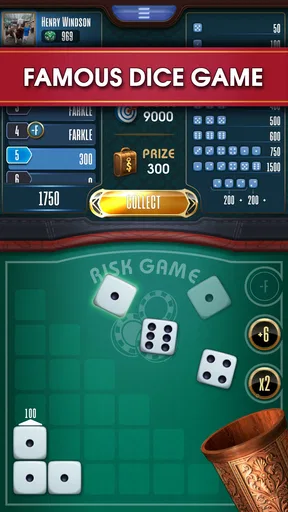
At its heart, Farkle is about deciding how much risk to accept. You roll dice, keep scoring combinations, and choose whether to bank your points or continue chasing a larger total. The important decision is not simply whether a roll is lucky. It is whether the points already collected are worth protecting, or whether the next roll is worth the possibility of losing progress.
That structure gives the game a useful rhythm. A cautious player can build a modest score and stop, while a more aggressive player can keep rolling and potentially create a much bigger lead. I enjoy that the tension comes from choices rather than from a complicated rulebook. Once the scoring logic makes sense, the focus moves quickly to reading the situation and judging the table.
A realistic use case is a short break with friends when nobody wants to learn a large strategy game. One person can suggest a few rounds, everyone can understand the basic objective quickly, and the group can still argue about whether a risky roll was brave or foolish. It also works for asynchronous social habits in which players return to a familiar game rather than committing to a long session, although the exact pace will depend on the match and the people involved.
The online focus changes the feel compared with playing with physical dice. A real table gives you conversation, gestures, and the small ritual of passing dice around. Here, the attraction is convenience: the game can bring players together without needing a physical set or a shared location. That makes it particularly suitable for friends who already enjoy casual competition but rarely have time to meet in person.
Learning the scoring without turning the first session into homework
New players should spend their first games learning the scoring patterns and the risk curve rather than trying to imitate experienced opponents. The most useful early habit is to separate a good roll from a good decision. A roll can offer an attractive scoring opportunity, but taking it does not automatically mean continuing is sensible.
I recommend treating the first few matches as practice in stopping at the right moment. Notice how often a comfortable score gets sacrificed for a tempting extra roll. That observation is more valuable than memorizing a single aggressive strategy, because the best choice changes with the current totals, the number of opponents, and the stage of the match.
One less obvious strength of this format is that it rewards emotional discipline. Players who chase a bad result because they are behind can make the gap worse, while players protecting a lead may become too passive. The dice create uncertainty, but the player still controls the response to that uncertainty. For me, that makes each turn feel more personal than a simple luck-based race.
What the free model means in practice
The game is free to download and play, which makes trying it straightforward. It also contains optional in-app purchases ranging from $0.99 to $99.99 per item. That wide span matters: free access lowers the barrier for casual players, but anyone considering purchases should decide in advance what they are comfortable spending rather than treating every offer as part of the basic entry price.
I would describe the value proposition as free access to a social dice game, with paid options kept separate from the initial cost. That distinction is important. A person who only wants occasional matches can evaluate the core experience without paying for the download. A more committed player may find optional purchases convenient or attractive, but their value depends on what that individual wants from the game, not on the fact that the items are available.
There is no reason to assume that spending automatically improves decision-making. Farkle remains interesting because of risk management, and no purchase can replace learning when to stop. If your goal is simply to enjoy a few rounds with friends, I would begin with the free experience and only consider spending after deciding that the game has earned a regular place in your routine.
That approach also helps answer a common practical question: is this a paid board game disguised as a free one? I would not frame it that way. The download is free, while optional purchases exist inside the game. The sensible choice is to regard payment as discretionary rather than necessary for testing whether the game suits you.
Where the online format adds value
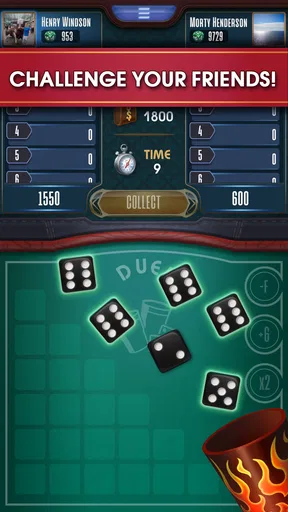
Online multiplayer is the clearest reason to choose this version over a physical dice set. A physical set is better when everyone is sitting together and wants an offline activity. This app is more useful when the players are apart, when setting up a table would be inconvenient, or when you want a match that is ready without finding dice, paper, and a scorekeeper.
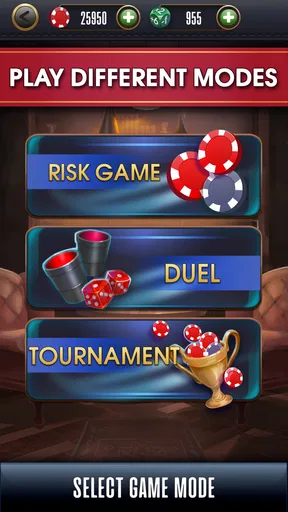
Tournaments add another layer for players who need more structure than isolated casual rounds. They can make the game feel more purposeful, especially for someone who enjoys comparing results and adapting over repeated matches. At the same time, a tournament setting may be less relaxing than a private game with friends, so I would choose the mode according to my mood rather than assuming competitive play is always better.
The social value is strongest for small groups that already like light rivalry. Farkle produces memorable swings, and those swings give friends something to talk about after a match. It is less suitable as a quiet solo pastime if what you really want is a deep puzzle with complete control over every outcome. The dice always retain a meaningful role, and that randomness is central to both the charm and the frustration.
Trade-offs that become clearer after regular play
The biggest trade-off is the balance between luck and judgment. You can make the correct risk assessment and still lose because the next roll fails. Conversely, an opponent can make a reckless choice and be rewarded. I see that as part of Farkle rather than a flaw, but players who prefer deterministic strategy games may find the results unsatisfying.
Another limitation is the potential repetition. The rules are approachable, which is excellent for bringing in new players, but the same push-your-luck loop may feel familiar after many sessions. Tournaments and online competition can extend the life of the game, yet they do not change the underlying decision pattern. If you need constantly changing boards, campaigns, or elaborate progression, this is probably not the right board-game app for you.
There is also a social dependency. Multiplayer features are most valuable when you have people willing to play, and a game designed around friendly competition may feel less compelling when approached without a personal group. I would choose it for a circle of friends who enjoy dice games, not as my first recommendation for someone seeking a rich single-player board-game experience.
Purchases are another point to handle carefully. The free starting point is helpful, but the presence of items from under a dollar to nearly a hundred dollars means the spending environment can be broader than a casual player expects. I would keep the purchase decision separate from the excitement of a winning streak. If you do spend, do it because the specific value is clear to you, not because a match has made you feel temporarily invested.
Small habits that improve the experience
My first practical tip is to set a personal stopping rule before a risky turn begins. For example, decide that a comfortable score is worth banking unless the match situation genuinely demands a comeback. The exact threshold should remain flexible, but having a rule prevents every promising roll from turning into an emotional gamble.
My second tip is to judge the scoreboard, not just your own dice. A moderate total may be excellent when you are ahead and inadequate when several opponents are close. This sounds obvious, yet it is easy to focus on the immediate roll and forget that Farkle is a race. The best decision is relational: it depends on what everyone else needs to win.
A third useful habit is to use early matches as observation sessions. Watch which opponents stop quickly, which ones chase long sequences, and which players change style when behind. You are not only learning the rules; you are learning how different risk profiles affect the table. That makes later games more interesting because you begin responding to people, not just probabilities.
Finally, I would avoid judging the game from one unlucky session. Random dice can make a short sample feel unfair, especially when a player loses after building a strong position. A fair evaluation should include enough rounds to see whether you enjoy the decisions between rolls. If those decisions remain satisfying even when the outcome goes against you, the game has probably found its audience in you.
Who should download it, and who should skip it?
I would recommend it to casual board-game fans who enjoy quick rules, social competition, and the suspense of deciding whether to push further. It is also a good fit for friends who want an online alternative to meeting around a physical table. The Everyone rating makes it approachable for a broad audience, although younger players may still benefit from an adult explaining the risk-and-reward idea during their first games.
It is especially appealing if you already understand why Farkle works: the fun is not just in rolling dice, but in making a decision immediately afterward. Players who enjoy friendly arguments over “one more roll” will probably get more from it than players who want a purely strategic abstract board game.
I would skip it if you dislike luck affecting the result, dislike competitive pressure, or want a large amount of content variation. I would also look elsewhere if your priority is offline tabletop atmosphere. A physical set remains better for face-to-face evenings where conversation and shared space matter more than convenience.
Compared with a standard digital board game built around fixed boards or deterministic movement, this one is more compact and more volatile. Compared with a physical Farkle set, it is more accessible for remote play but less tactile. Those are meaningful differences, not simple upgrades. The right choice depends on whether you value portability and online competition over the feel of real dice in your hand.
Device details and my buying recommendation
The game was released on March 27, 2020, and its current version is 2.14.1.27. It requires Android 6.0 or later, so it remains accessible on many older Android devices. That is useful for families or friend groups whose phones are not all recent, although actual smoothness can still vary with the device and connection.
AppForge Interactive Entertainment FZ-LLC has positioned this as a dedicated Farkle dice game rather than a broad collection of unrelated board activities. I appreciate that focus because the rules and the online experience point toward one clear type of player. You are not downloading it for a campaign, a story, or a large library; you are downloading it for repeated rounds of risk-based dice play.
My verdict is to try it for free if you have friends who will actually join you. The free entry makes that experiment reasonable, and the online matches and tournaments give the familiar rules a convenient digital home. I would not recommend buying optional items immediately, because the core question is whether you enjoy the decision-making loop, not whether you can add extras to it.
After spending time with it, I see Farkle Dice Game: Online 10000 as a focused, approachable choice rather than an all-purpose board-game replacement. It delivers its best value in short social sessions, especially when players enjoy taking calculated risks and laughing at dramatic reversals. If that sounds like your kind of evening, Farkle Dice Game: Online 10000 is worth trying. If you want deep control, rich variety, or the physical atmosphere of a tabletop, your money and time will likely be better spent elsewhere.
Verdict
Strengths of Farkle Dice Game: Online 10000
- Simple rules make it easy for new players to start quickly.
- Online matches add variety beyond playing against the computer.
- Short rounds fit well into quick breaks or casual sessions.
- Dice animations and sound effects make rolls feel satisfying.
- Multiple scoring decisions give lucky rolls some strategic depth.
Limitations of Farkle Dice Game: Online 10000
- Random dice outcomes can outweigh careful decisions in close games.
- Online matchmaking may be less enjoyable with inactive opponents.
- Ads may interrupt play or require purchases to remove them.
- Higher scores often require risky rolls that can wipe out a turn.
- The interface can feel crowded on smaller phone screens.
Similar Picks in This Category
View All
Ludo King®
Gametion4.1

Ludo
Yarsa Games4.6

Tile Master® - Matching Game
Higgs Studio3.6

Checkers Online
CC Games4.6

Dominoes
Loop Games4.7

Chess
Chess Prince4.6
Frequently Asked Questions
What is Farkle Dice Game: Online 10000, and how is it played?
Farkle Dice Game: Online 10000 is a digital version of the classic push-your-luck dice game, where the goal is to reach 10,000 points before your opponents. On each turn, you roll the dice, set aside scoring combinations, and decide whether to roll again or bank your points. Rolling without a scoring combination causes you to lose the points from that turn, so knowing when to stop is essential.
Can I play Farkle Dice Game: Online 10000 offline or without creating an account?
The game is mainly designed around online play, so features such as multiplayer matches, leaderboards, or competitive events may require an internet connection. Depending on the current version, you may also find solo or practice modes that work with limited connectivity. Account requirements can vary between Android and iOS releases, so it is worth checking the sign-in screen and privacy information before starting.
Does Farkle Dice Game: Online 10000 support multiplayer matches?
Multiplayer is one of the main attractions of Farkle Dice Game: Online 10000. Players can typically compete against friends or other users in online matches, making the game more social than a traditional single-player dice app. Matchmaking speed and available modes may depend on the number of active players, your region, and the game’s current server status.
Are there advertisements or in-app purchases in Farkle Dice Game: Online 10000?
As with many free mobile games, Farkle Dice Game: Online 10000 may include advertising and optional in-app purchases. Ads can appear between rounds or during menu navigation, while purchases may provide cosmetic items, bonuses, or other convenience features depending on the version installed. Review the store listing and payment settings carefully, especially if children will be using the device.
Is Farkle Dice Game: Online 10000 suitable for beginners?
Yes, the game is generally easy for beginners to understand because its basic rules involve rolling dice, collecting combinations, and choosing whether to continue or bank points. However, the scoring system and risk-management decisions can take a few rounds to master. New players should begin with practice or casual matches, learn the scoring combinations, and avoid chasing large scores on every turn.
Play our best games!


